
Almost $9 billion. From a single tournament. The 2026 World Cup is the most profitable thing FIFA has ever done — and the way that money comes in (and goes out) has details that'll drop your jaw. We break down the numbers in 7 parts. #1 is where nearly half of it all comes from.
The 2026 World Cup is, at once, the biggest sporting spectacle on the planet and the biggest money machine FIFA has ever built. Projections show the organization will make about $8.9 billion from this tournament alone — the largest single payout in the organization's history.
But where does all that money come from? And where does it go? The answer has surprising layers — from a record $871 million in prize money to an Asian market that refused to pay what FIFA asked. And an uncomfortable question at the end: who really profits, and who foots the bill?
We break down the World Cup's economics in 7 parts, from the smallest to the biggest source of revenue. And part #1 alone accounts for nearly half of everything FIFA takes in.
#7 — The cost: the most expensive World Cup in history, $3.76 billion
Before the profit, the spending. The expanded format — 48 teams, 104 games — makes this the most expensive World Cup in history, with an organizing budget of about $3.76 billion.
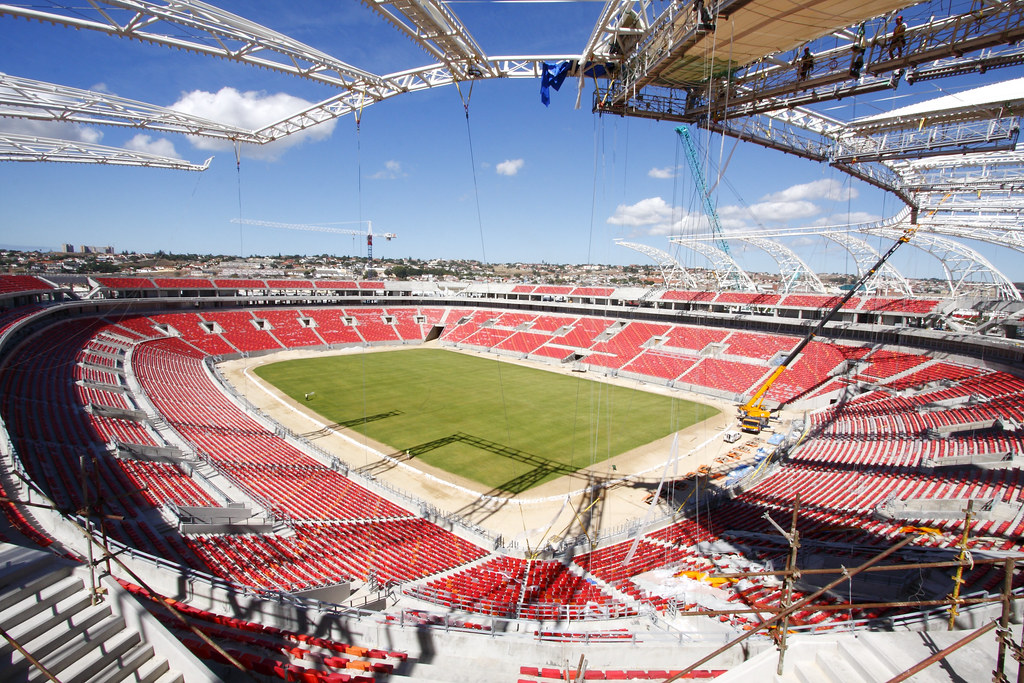
But unlike Qatar 2022 (which built stadiums from scratch), the U.S., Mexico, and Canada use arenas that already existed. That avoids the "white elephants" and changes the logic: the profit comes less from building and more from filling mega-stadiums that were already standing. The cost is high, but the return is designed to be much bigger.
Now the revenue sources. And each one is bigger than the last. 👇
#6 — The prize money: $871 million, an all-time record
Part of the money that comes in also goes out — to the teams. The 2026 World Cup prize pool is $871 million, a record, up about 65% from Qatar's $440 million.
How it works: each team earns at least $12.5 million just for qualifying ($2 million more than in 2022), and the amounts rise with performance. The champion could pocket about $53.5 million in total — $11.5 million more than Argentina took home four years ago. Even the referees are in on it: an official can earn up to $100,000 if they reach the final.
The next part is a controversial novelty that multiplied ticket revenue.
#5 — The tickets: the dynamic pricing that outraged fans
Here's a controversial novelty. For the first time at a World Cup, FIFA used dynamic pricing for tickets — prices change with demand, like airline fares.
The result? Tickets for many games sold for hundreds or thousands of dollars, with some games ten times more expensive than in Qatar. Tickets started at $200 for lower-appeal group-stage games and reached $3,000 at the top — and, in an extreme case, the official platform even offered opening-match tickets at stratospheric prices. Ticketing and hospitality revenue could reach $3 billion, a jump of more than 200% over Qatar.